BlackVue
- 3.4
- Rating
- 1.00M
- Installs
- Free
- Price

 Analysis by App-foxy
When I installed BlackVue, I approached it less like a normal navigation app and more like a control panel for a compatible BlackVue dashcam. That distinction matters. It is not designed to replace Google Maps or Apple Maps for planning a route; its job is to help you interact with the camera, review what it captures, and use the BlackVue Over the Cloud service when your setup supports it. In my experience, the app makes the most sense when the dashcam is already part of your daily driving routine.
The app comes from pittasoft and is available for free in the Maps & Navigation category. It has passed the half-million-install mark, while its average rating sits at 3.1 from roughly 8.9 thousand ratings and 930 written reviews. Those numbers suggest a very specific kind of experience: useful for owners who need the companion connection, but not universally smooth for every phone, camera, or network situation.
From a parked car to a usable recording
The most realistic way to judge this app is to follow a complete workflow. Imagine arriving back at your car after a minor incident in a supermarket car park. The starting condition is simple: the dashcam has recorded something, and I want to check the footage without removing storage media or guessing which file matters. I open the app, connect it to the camera, and move from the physical device to the phone screen.
You May Also Like

 Blood Strike: 2.5 Anniversary
Blood Strike’s Loadouts Turn Every Drop Into a Tactical Gamble
A close look at Blood Strike’s custom loadouts: how fast access to signature weapons reshapes its battle royale rhythm, rewards preparation, and narrows the gap between fights.

 Pandora - Music & Podcasts
Pandora’s Music Is Easy to Start, but Harder to Recover
Pandora’s strength is its low-effort path from a seed to a station. Its weak spot is how much confidence it asks you to place in connection, setup, and quiet recovery.

 8 Ball Pool
 Is Built on Rivalries, Rematches, and Routine
A close look at the rivalries, rematches, shared routines, and unanswered safety questions that turn a quick pool match into a persistent mobile community.

 Samsung Music
’s Quiet Strength Is Playing What You Already Own
Its reach comes less from spectacle than from dependable access to a personal library. That simplicity is both the app’s strongest retention engine and its ceiling.

 AccuWeather: Weather Radar
AccuWeather Review: A Quick, Clear Forecast for Everyday Decisions
For everyday plans, the best forecast is the one you can understand quickly. AccuWeather makes rain timing, radar, and local conditions easy to act on, with a few trade-offs.

 Hill Climb Racing
Why Hill Climb Racing Still Turns Crashes Into One More Run
A tiny car, a bumpy hill and one more upgrade: Hill Climb Racing keeps resurfacing because its simple chaos makes every near-miss feel personal.
More From Our News Desk



That first handoff is where expectations need to be realistic. BlackVue is a companion rather than a self-contained camera system. The quality of the experience depends on the dashcam connection, the phone, and the way the camera is configured. The app itself cannot make an unsupported camera behave like a newer model, and it cannot turn a weak connection into a reliable one. I found it helpful to treat the phone as a viewing and management tool, not as the main source of the recording.
Once the connection is available, the useful task is narrowing down the relevant clip. Instead of treating the app as a general media gallery, I use it with a purpose: check the time around an event, identify the correct camera view, and save or share what is needed. This focused approach is faster than browsing every recording casually, especially when the dashcam has been running through a long drive.
Why the first connection deserves patience
The connection stage can feel less immediate than opening a regular photo app. A dashcam is a separate device, often sitting inside a parked vehicle, so there is an extra step before the footage becomes available on the phone. I recommend parking safely before doing anything detailed. Trying to manage clips while sitting at a traffic light is both inconvenient and unsafe, even if the app itself opens quickly.
I also prefer to connect before I urgently need a file. A quiet test in the driveway reveals whether the phone sees the camera and whether the expected footage is accessible. That small preparation step is one of the most practical ways to reduce stress after an incident. It also gives me a chance to learn the layout without making decisions under pressure.
For ordinary driving, the app is most valuable when it reduces the number of physical steps between the dashcam and the person who needs the video. That can mean checking a suspicious event, confirming that a trip was recorded, or preparing a clip for someone else. It is less valuable if I only want turn-by-turn directions, because dedicated navigation apps are built around maps, traffic, route changes, and destination search rather than camera footage.
Moving from the camera to the phone
The next handoff is the actual transfer of attention: I move from looking at the road and the vehicle to examining a recording on a smaller screen. This is where the companion design becomes clear. The app gives the dashcam a more approachable interface than handling files directly, but the phone is still only one part of the chain.
A useful habit is to identify the event before downloading or sharing anything. I first check the surrounding moment, then confirm that the clip shows the right direction and context. A short-looking incident can require footage immediately before and after it. Saving only the most obvious segment may leave out the approach, the road position, or what happened immediately afterward.
That workflow is especially useful for drivers who want evidence organized around an event rather than around a whole day of driving. It also helps avoid filling the phone with recordings that will never be viewed. I would not describe this as a full video-editing environment; I see it as a practical bridge between the camera’s storage and the phone’s everyday sharing tools.
Where BlackVue Over the Cloud fits
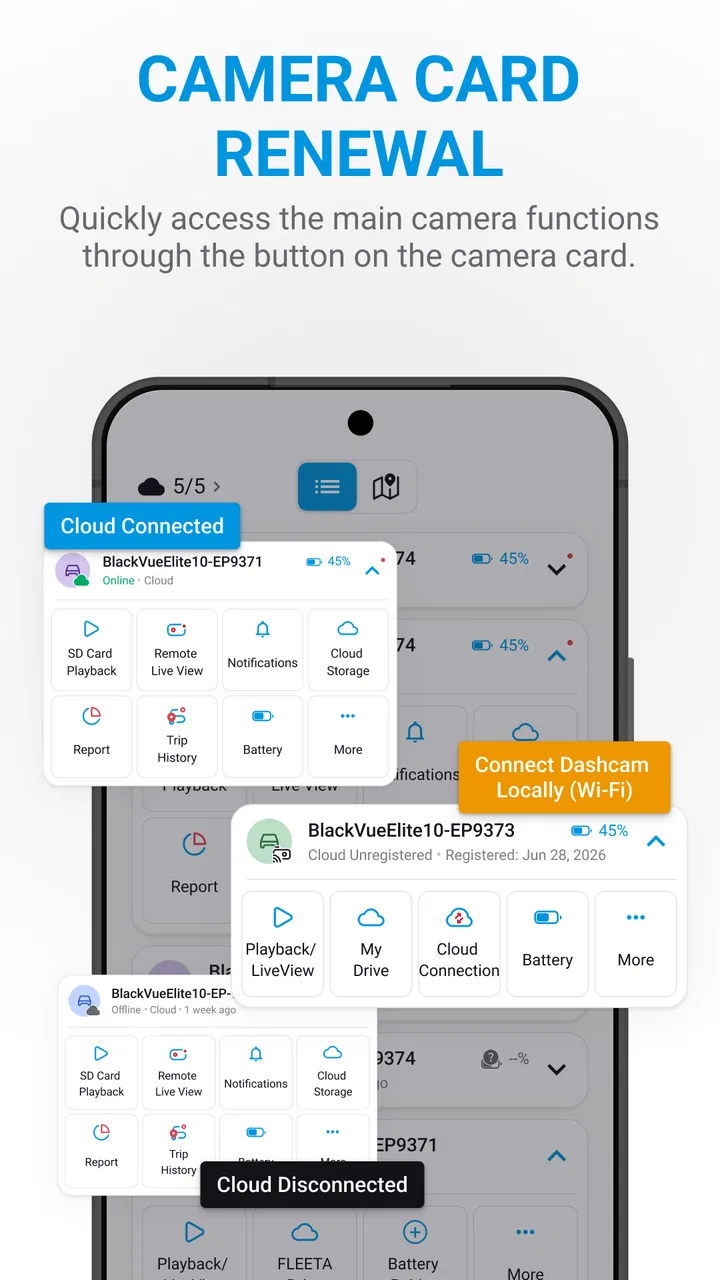
The Over the Cloud element changes the workflow because the handoff no longer has to depend entirely on standing beside the vehicle. In a suitable setup, the app can act as the connection point for checking the dashcam through the internet-based service. That is the part I would investigate first if remote access is the main reason for installing the app.
However, cloud access is not the same as having a recording available instantly in every situation. The camera, its connection, the phone, and the service all have to cooperate. A remote workflow can be convenient when I need to check on a parked vehicle from elsewhere, but it introduces more points where a request can slow down or fail than a simple local connection.
This creates an important trade-off. Local access is usually the more direct path when I am physically near the car. Cloud access is more interesting when distance matters, but it deserves a test before I rely on it for something important. I would not wait until a suspected incident to discover that remote viewing has not been configured properly.
For that reason, I recommend a two-part routine. I test local viewing while parked, then test the cloud workflow separately when I have time. I also make sure I understand which route I am using before an event occurs. That preparation is more valuable than repeatedly opening the app and assuming that a visible camera entry automatically means every remote function is ready.
The handoff from private footage to shared evidence
One of the less obvious decisions is what happens after I find the right recording. A dashcam clip may be useful only to me, or it may need to go to an insurer, a repair shop, a family member, or another driver. The app sits at the beginning of that handoff, but the final sharing step belongs to the phone’s normal tools and the recipient’s needs.
I prefer to keep the original recording untouched and create a clearly identified copy for sharing when possible. That preserves context and prevents an edited or compressed version from becoming the only copy. Before sending anything, I check whether the clip actually answers the question the recipient is asking. A dramatic moment without the surrounding road view may be less useful than a longer, calmer sequence.
Privacy is another practical consideration. A recording can contain faces, number plates, locations, voices, and a complete route. I would avoid sending a whole driving history when one relevant segment is enough. The app’s value here is not just that it helps me locate video; it encourages a more deliberate path from camera evidence to a controlled handoff.
What the result feels like in daily use
The best outcome is straightforward: I can reach the dashcam’s footage from my phone, identify the relevant moment, and move the needed recording onward without physically managing the camera’s storage every time. That is a meaningful convenience for regular BlackVue owners. It also makes the camera feel less like a device that records silently and more like a system I can actually inspect.
I found the app most convincing in situations where the recording has a clear purpose. For example, after noticing that another vehicle had made a sudden manoeuvre near me, I could park, connect, check the moment, and decide whether the video was worth keeping. The app did not remove the need for judgement, but it shortened the path from uncertainty to a viewable clip.
Another useful scenario is lending the car to a family member. If I need to check whether a trip was recorded or review an unusual event, the companion app gives me a practical starting point. I still would not use it as a substitute for speaking to the driver or checking the physical vehicle, but it can add a visual record to the conversation.
For professional drivers or people who spend long hours on the road, the value can be higher because recordings may matter more often. Even then, I would judge the app by reliability in the exact vehicle and phone combination rather than by the feature list alone. A workflow that works perfectly at home but becomes awkward in a busy roadside situation is not yet a dependable workflow.
Where the workflow breaks down
The main weakness is that several separate links have to work together. If the phone cannot connect cleanly, if the camera is unavailable, or if the cloud path is not ready, the app cannot deliver a smooth result by itself. This is likely part of why the overall rating is only moderate. A companion app can be judged harshly for problems that begin with the camera, connection, or device compatibility, but the user still experiences the whole chain as one product.
The app is also a poor choice for someone searching for a general navigation solution. Its Maps & Navigation classification may make it sound like a route-planning tool, yet its practical role is tied to BlackVue dashcams and their recordings. If your priority is live traffic, public transport, walking directions, or finding a restaurant, a conventional mapping app is the better option.
Another point of friction is learning what should happen locally and what should happen through Over the Cloud. New owners may assume that every clip is equally accessible from every location. I would instead think of the app as offering different paths: a nearby camera workflow and a remote service workflow. The right path depends on where I am and what I need to retrieve.
Storage and attention can become problems too. Keeping every recording on the phone is unnecessary, while deleting too quickly can remove useful context. I recommend reviewing clips in batches, keeping only event-related material, and naming or organizing important files immediately after transfer. This is a small habit, but it prevents the common outcome of finding the right video and then losing it among unrelated downloads.
Compatibility, cost, and what to expect
The app is free to install, with in-app purchases listed from $0.99 to $299.99 per item. That range makes it important to distinguish the app download from any paid elements connected with the wider BlackVue experience. I would review the purchase screen carefully rather than assuming that installing the companion costs nothing in every practical scenario.
It carries an Everyone age rating, which fits a driving companion that is not presented as mature entertainment. The current version is 4.20, and the minimum operating-system requirement is version 10. Before installing, I would check the phone’s software and, more importantly, confirm that the specific BlackVue camera is intended to work with the app. The camera model is the real starting point; the app cannot replace that check.
The developer, pittasoft, has built the experience around its own dashcam ecosystem. That is a strength for owners who want a single companion rather than a collection of unrelated tools. It is also a limitation for drivers who are comparing cameras across brands. A more brand-neutral approach may be preferable if you want one phone app to manage different dashcams or treat footage like ordinary files.
Compared with the usual alternatives, BlackVue is not competing directly with map apps. It competes more closely with a camera manufacturer’s desktop viewer, direct storage-card handling, or another brand’s dashcam companion. Its advantage is convenience on the phone and the possibility of cloud-based access. Its disadvantage is dependence on the BlackVue setup and the extra complexity that comes with remote connectivity.
Who should install it, and who should skip it
I would recommend it to someone who owns a compatible BlackVue dashcam and wants a practical way to inspect recordings from a phone. It is particularly suitable if you regularly need to check incidents, share selected clips, or explore the Over the Cloud workflow. The app becomes more worthwhile when the dashcam is used as an ongoing record rather than switched on only for occasional trips.
I would be more cautious if your only goal is navigation. You will likely find route planning and traffic information more useful in a dedicated mapping app. I would also hesitate if you dislike troubleshooting connections or if you expect every recording to be available remotely without preparation. In that case, a simpler camera setup with direct file access may feel less frustrating.
My practical advice is to install it before you need it, connect it while parked, locate a normal recording, and test the exact sharing route you expect to use. Then try the cloud path separately if remote access matters. Those tests answer the questions that a short store description cannot: whether your phone and camera cooperate, whether you can find clips quickly, and whether the final handoff fits your daily routine.
After using it as a complete camera-to-phone workflow, I see BlackVue as a useful but specialized companion. It does not turn a dashcam into a general navigation device, and it cannot eliminate every connection or setup problem. What it does offer is a clearer route from a recording inside the car to a clip I can inspect and share. If you already rely on a compatible BlackVue dashcam, that focused convenience is the reason to keep it installed; if you do not, there is little reason to choose it over a normal maps app.
My final view is positive with reservations. The free app gives BlackVue owners an important everyday link to their camera, while Over the Cloud adds a potentially valuable remote layer. The experience is strongest when I prepare the connection, use local access when I am near the vehicle, treat cloud access as a separate workflow, and manage shared footage carefully. With those expectations, it can be a sensible part of a dashcam setup rather than an app I open only after something has gone wrong.
FAQs for BlackVue
01What features does the BlackVue app offer?
The BlackVue app provides a comprehensive set of features including real-time viewing of your dashcam footage, GPS tracking, cloud connectivity, and video playback. Users can also configure camera settings, manage video files, and receive alerts. Its user-friendly interface ensures easy navigation and control over the dashcam functions.
02Is the BlackVue app compatible with all BlackVue dashcam models?
The BlackVue app is compatible with most BlackVue dashcam models. However, it's essential to check the specific compatibility of your dashcam model on the official BlackVue website or within the app's description in the app store to ensure full functionality and support.
03How does BlackVue Cloud enhance the app experience?
BlackVue Cloud allows users to access their dashcam footage remotely, providing features like Live View, video backup, and notifications. This cloud service enhances security by offering real-time monitoring and the ability to download important videos directly to your smartphone, ensuring you never lose critical footage.
04Are there any subscription fees for using BlackVue Cloud services?
BlackVue offers both free and subscription-based cloud services. The free tier includes basic features, while premium plans offer enhanced storage, multiple camera support, and priority customer service. It's advisable to review the subscription options to determine which plan best suits your needs.
05What are the common issues users face with the BlackVue app?
Some users report connectivity issues, particularly with maintaining a stable connection to the cloud or dashcam. Others mention occasional app crashes or difficulties with firmware updates. Ensuring your app and dashcam firmware are up to date can help mitigate these issues, and customer support is available for assistance.
Pros
- High-quality video resolution for clear footage.
- User-friendly interface for easy navigation.
- Seamless cloud connectivity for remote access.
- Wide-angle lens captures more of the road.
- Reliable performance even in extreme temperatures.
Cons
- App can be resource-heavy on older devices.
- Limited customization of user settings.
- Subscription required for full cloud features.
- Occasional connectivity issues with Wi-Fi.
- App updates can be slow to roll out.

BlackVue
Gallery